Ask any fleet manager what is holding up their move to electric, and the answer is rarely the vehicles themselves. It is the charging infrastructure.
Before a conventional electric van or truck can even enter commercial service, the operator typically must fund and install a charging system at their premises, incorporating chargers, cabling, groundwork, and very often an upgrade to the site’s electricity supply. It is a significant cost in its own right, and for many businesses it is the single biggest barrier between them and a cleaner fleet.
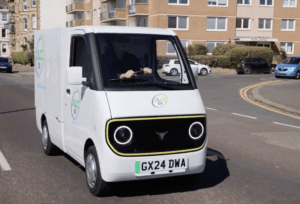
JLC EV has removed that barrier with a focused portfolio of four micro-electric vehicles (MEVs), spanning cargo bikes, mopeds, a three-wheel utility vehicle and a micro electric van – all purpose-built for last-mile delivery and urban mobility. And every one of them shares a deceptively simple advantage: they charge from an ordinary 13-amp, three-pin wall socket. A full charge takes only a few hours, comfortably within an overnight window.
For fleet operators and businesses, that single design decision changes the economics of going electric.
The hidden cost of conventional EV charging
Industry guide pricing for the UK in 2026 puts a standard AC workplace charger (7 to 22kW) at roughly £1,500 to £10,000 per point once equipment, labour and compliance are included. DC rapid chargers – the kind heavier commercial fleets often need to keep vehicles moving – run from around £15,000 to £30,000 per unit and beyond. And those figures assume the depot’s electricity supply can cope.
Frequently it cannot: many sites need an upgrade to three-phase power or a reinforced grid connection, commonly adding several thousand pounds and, in more complex cases, £20,000 or more. Groundwork, trenching and cabling add further cost per charger.
Multiply that across a depot. A modest commercial site running a mixed electric fleet can easily face a six-figure infrastructure investment before a single parcel is delivered.

Government support exists, and it is welcome. The Depot Charging Scheme – part of a £170 million multi-year programme – can fund up to 70 per cent of charger and civil works costs. But it is competitive and assessed on a first-come, first-served basis, and it also runs in time-limited application windows with hard delivery deadlines; the operator still funds the remaining 30 per cent.
Critically, it does not cover grid reinforcement or the vehicles themselves. For many operators, infrastructure remains a substantial, uncertain and front-loaded cost.
JLC EV’s answer: the socket you already have
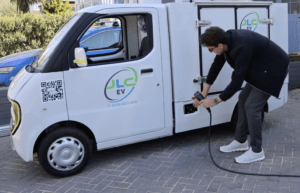
Because micro-electric vehicles are light and carry compact batteries sized for urban duty cycles, they draw modest power and recharge quickly from a standard domestic or commercial socket. There is no need for a dedicated chargepoint, no need for new cabling runs, no civil works, and no grid or three-phase upgrade. An operator can plug a vehicle in at the end of a shift and have it fully charged and ready for the next day – using infrastructure that is already in the building.
In practical terms, the “charging infrastructure project” that defines a conventional EV rollout simply does not exist with a JLC EV fleet.
What that means for your business
For fleet operators and businesses weighing the move to electric, charging from a standard wall socket delivers benefits that go well beyond convenience:
- No infrastructure capital outlay. The tens of thousands of pounds that would otherwise be tied up in chargers and civil works can be redirected into vehicles, people and operations.
- Deploy in days, not months. With no grid connection to wait for and no installation project to schedule, vehicles can enter service almost as soon as they arrive.
- Operate from any site. Standard sockets are everywhere. That makes JLC EV vehicles equally at home in a leased unit, a shared yard, a temporary or satellite hub, or even at a driver’s home – without negotiating landlord consent for fixed charging equipment.
- Scale without re-engineering. Adding vehicles to a conventional electric fleet often means adding chargers and revisiting the site’s power capacity. With JLC EV, growth is as simple as plugging in another vehicle.
- Independence from grant timetables. Operators are not reliant on securing competitive, deadline-bound infrastructure funding before they can move.
- Fewer things to fail. No charge-point hardware, no charge-point management software, no associated maintenance contracts – a simpler, more resilient operation with lower ongoing cost.
Taken together, these advantages produce a faster, cleaner and more predictable total-cost-of-ownership case – and a far lower barrier to entry for any business that wants to electrify its last mile.
Next steps
To arrange a product demonstration at JLC EV’s Sussex base or at your premises, contact sales@jlcev.com, call 0330 0532 030, or visit www.jlcev.com